

To be connected to our natural world is to be connected to our Creator.
This is a truth that has been embraced by the Mount. It was embraced by Sr. Paula Gonzalez when she and 35 volunteers built La Casa del Sol, and it’s embraced now by the work of the MSJ Sustainability Committee. Taking care of the earth is an integral pillar of Catholic social teaching. The USCCB (United States Conference of Catholic Bishops) asserts that “we show our respect for the Creator by our stewardship of creation.” Caring for the earth is a requirement of the Catholic faith, as nurturing care protects all of God’s creations, us included. The truth that we find God in the soil is evident enough; we are entirely inseparable from His works.
But in the present day, I see the Mount as being in a crisis of faith. While the history of our campus and its religious duty calls the Mount to tend to our Lord’s garden, modern advances in technology tempt us to embrace the machine. AI (Artificial Intelligence), as most of us know, has exploded in recent years. It has embedded itself into the day-to-day lives of so many people and has become a topic of discussion here at the Mount. On the administrative level, Mount staff are determining what the Mount's AI policy should be. Some advocate for the use of AI by staff: whether it be to aid in teaching, utilized for marketing, or analyze data. I, however, believe that the Mount’s attitude toward AI-use by campus administration should be a “no tolerance” policy, plain and simple.
AI causes mass amounts of damage to our earth and our communities to do work that can be and historically has been done through more modest means. To function, AI requires the building and operation of massive data centers that consume large quantities of energy and water—both finite resources. Sarah Mangelsdorf and Lauren Behan in a 2025 article published in the journal Brief report that an average prompt entered into ChatGPT consumes approximately five times more energy than a simple web search, with some estimates putting the energy use at up to ten times more than a web search. Furthermore, AI data centers need to consume water to use energy, with it being stated that “...for each kilowatt hour of energy a data center consumes, it would need two liters of water for cooling.” Because heat is produced in the consumption of energy, data centers must also suck up water resources to cool. These numbers may appear small or insignificant, but when millions of people enter prompts into ChatGPT alone daily, they start to add up.
Beyond resource consumption, AI also creates large amounts of hazardous waste that threatens human communities. To create the GPUs (Graphic Processing Units) required in data centers that support AI, the mining of various raw materials and minerals must take place, such as chromium, copper, and lead. The mining of these materials, according to the Brief report, can seriously impact nearby communities, as “The mining of these raw materials often causes pollution to land, water, and air.” As raw materials and minerals are mined, they create a runoff of waste that infects nearby streams and groundwater, infects soil, and releases harmful substances into the air.
Take cobalt, one of the materials needed for GPU production, for instance. The mining of cobalt “...releases sulfides into the air and water, forming sulfuric acid, which can pollute streams and leach into groundwater.” When pollutants such as sulfuric acid make their way into the water, air and earth of communities, the new technology is clearly posing a risk to the health of human communities.
And the waste problem doesn’t even end with the completion of an AI’s life-cycle. Because of the constant demands placed on AI to perform complex actions and process mass amounts of data, the hardware used in AI typically has a lifespan of only two to five years. This creates large amounts of e-waste, which often ends up in landfills. When e-waste produced by AI enters landfills, it contaminates the soil and groundwater with toxic substances, posing health risks to communities immediately around the e-waste and even those more distant from it, as the contaminated water is often transported to communities farther away.
According to Brief, “One study of soil and water samples in an e-waste scrapyard in Ghana showed significant levels of heavy metal contamination both in the soil and in the groundwater.” Even when AI is disposed of, it poses a threat to human communities by contaminating soil and water.
Some may argue that as unfortunate as the ecological and human consequences of AI are, AI is a new technology that the Mount must adapt to and find a means to use effectively. It could be used for so many different tasks, and increase the efficiency of work done at the Mount. Here are my issues with those arguments:
1. The Mount doesn’t have to institutionalize a new technology just because other institutions are using it; the Mount has a choice.2. All of the work that AI does is work that can be and has been done with our existing technology and human labor, and the Mount isn’t so in need of increasing the speed at which work is done that it warrants using perhaps one of the most ecologically destructive technologies of our time.
We as a culture feel so inclined to just accept any new technology thrown our way, and forfeit personal responsibility by saying “everyone else uses it!” We see a technology that’s more "efficient" and our eyes light up; in our fascination we forget to ask ourselves whether the cost of efficiency is worth it. We have plenty of great staff here at the Mount—why do any of them need to use an AI to help with the university’s administration? Sure, work might be done a little slower if we refuse to use AI, but the fact is that the Mount has been able to operate successfully without it. There’s therefore no point in using a remarkably destructive technology to fix a problem that we don’t have.
The Catholic faith calls Mount St. Joseph University to nurture God’s creation. The Mount has done it in the past, and continues to do so. But AI threatens to corrupt the Catholic moral virtue of the Mount. By using AI at the institutional level, the Mount is participating in the overconsumption of the earth’s energy and water resources, and the destruction of communities by hazardous waste, just to create a solution to a problem that doesn’t exist and fall in line with other institutions.
The Mount thus stands at a crossroads: will it stand for God and use His creation with modesty and reverence, or will it worship a new god?
Works Cited
Mangelsdorf, Sarah, and Lauren Behan. “Born Electric, Buried Toxic: The Life Cycle of
Generative AI and Its Environmental Impact.” Brief, vol. 54, no. 4, July 2025, pp. 28–35. EBSCOhost, research.ebsco.com/linkprocessor/plink?id=d2e1b137-849e-322c-8a0b-75308d251963.
United States Conference of Catholic Bishops. “Seven Themes of Catholic Social Teaching.”
USCCB, 2005, https://www.usccb.org/beliefs-and-teachings/what-we-believe/catholic-social-teaching/seven-themes-of-catholic-social-teaching.
Photo Credit
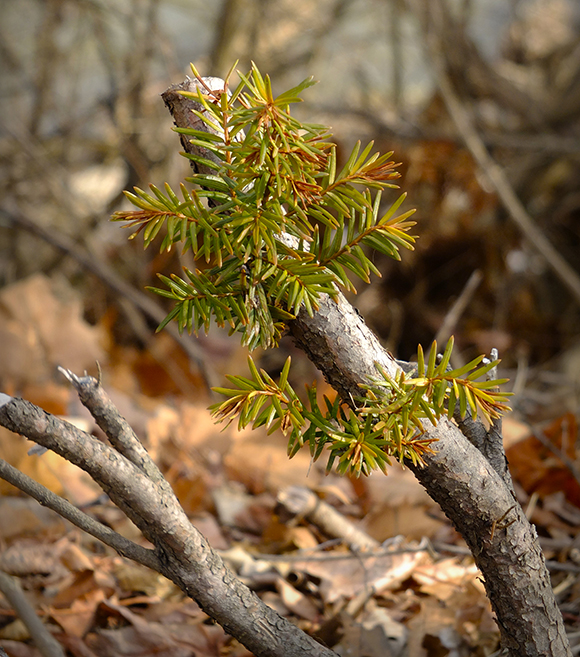
The photo used for this article was taken at Fernbank Park by Mount student Kaley Knapp '26, who has granted permission for her work to be used as the accompanying image of this article.