Immersive, student-built 3D installations reimagine campus spaces through innovation, craftsmanship, and bold artistic vision.
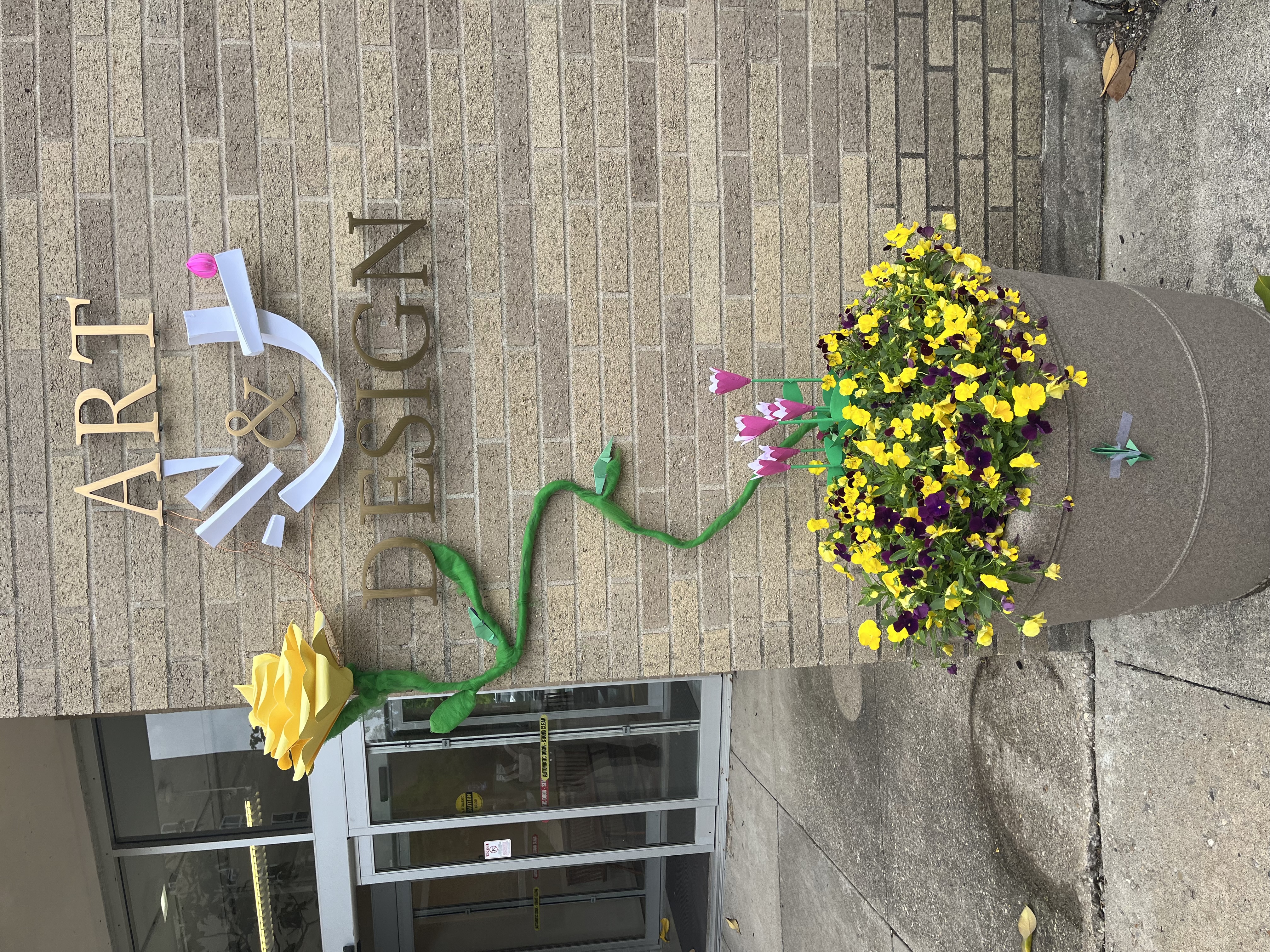
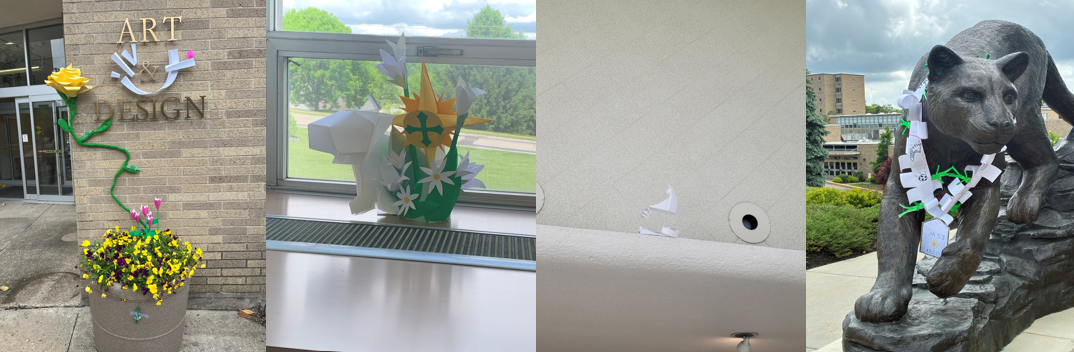
Over the past few weeks, students in Kurt Grannan’s 3D Design class have turned the campus into an interactive gallery, installing imaginative planar sculptures in unexpected spaces that invite curiosity, surprise, and engagement.
Working collaboratively in small groups, students were challenged to design and construct installations using primarily flat, planar materials paper, cardstock, and other lightweight media while exploring how form, repetition, and structure can create dynamic three-dimensional experiences. The result is a series of inventive works that appear throughout campus, from quiet interior ledges to prominent outdoor landmarks, including the university mascot.
One installation, perched high along an interior wall near the ceiling, plays with perception and fragility. Its delicate, curling paper forms seem almost to float, catching the eye of passersby who might otherwise overlook the architectural space. The subtle placement transforms an ordinary corner into a moment of quiet discovery.
Another piece adorns a well-known campus statue, Catamount, designed and created by international sculptor Tom Tsuchiya, where students wrapped the figure in a chain-like structure composed of interconnected paper segments. Accented with bright ties and hand-drawn imagery, the piece blends whimsy with symbolism, transforming a familiar landmark into something newly expressive and interactive.
“These projects push students to think beyond traditional sculpture,” Grannan said. “By limiting materials and focusing on planar construction, they have to problem-solve creatively how to build volume, how to create movement, and how to interact with a specific site.”
Students also found the experience both challenging and rewarding. “It was really interesting to see how something as simple as paper could become something so large and interactive,” one student shared. “Working as a group pushed us to think differently and trust each other’s ideas in the process.”
The installations are not confined to galleries or classrooms; instead, they activate everyday spaces, encouraging viewers to encounter art in the flow of daily life. Students considered not only the physical construction of their pieces but also their relationship to the environment how a work might respond to architecture, weather, or the habits of people moving through campus. As the semester draws to a close, these temporary works serve as a reminder of the creativity thriving across campus.